
MARY IN THE JUNKYARD
May 2025
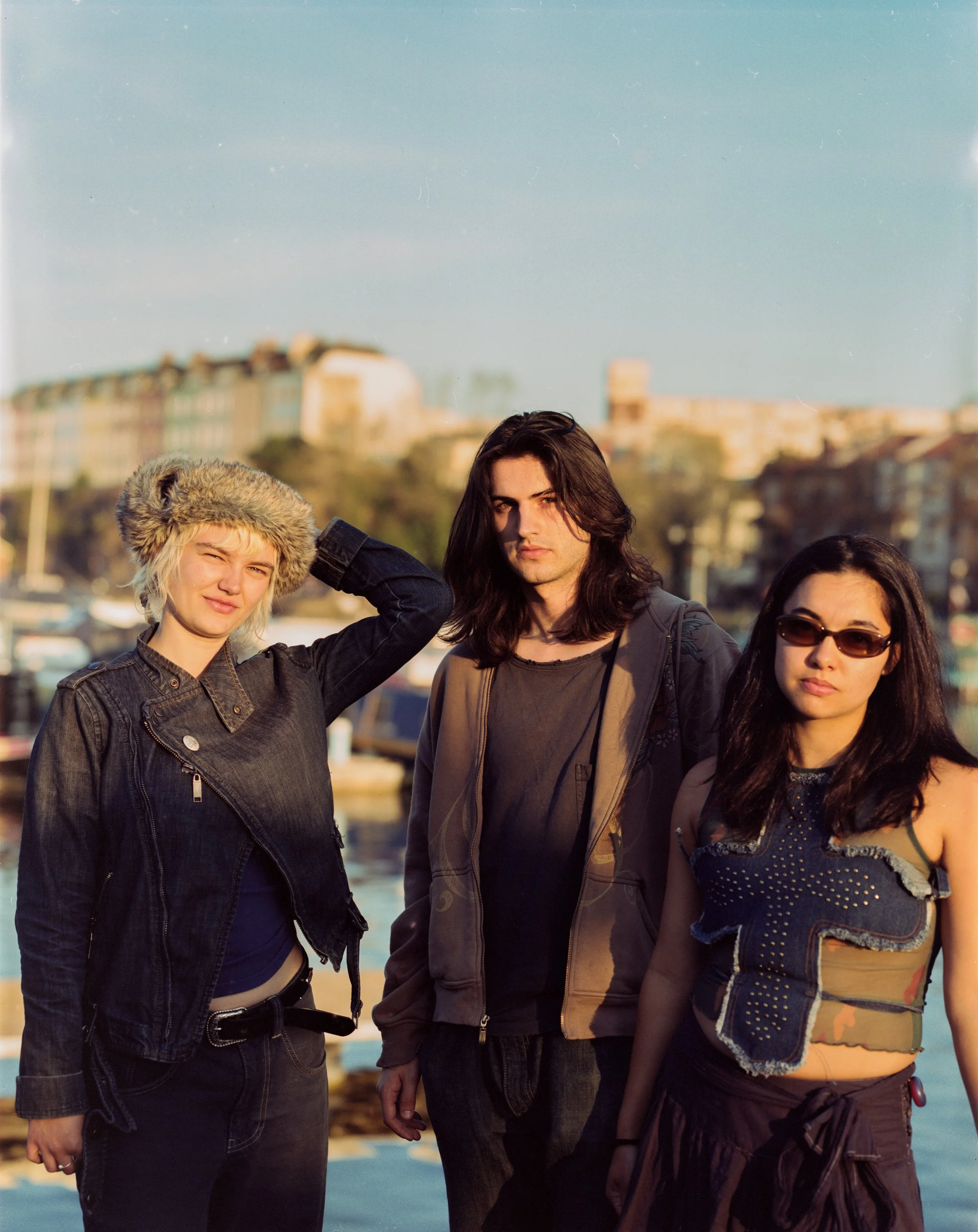
Having snuck into the AAA section of a festival on German soil, it’s a relief to meet the members of mary in the junkyard. Singer Clari Freeman-Taylor, drummer David Addison, and bassist Saya Barbaglia have emerged as the ones-to-watch in London off the back of a half-dozen rock-folk singles that are as beautiful as they are creepy. Their tours – which are supported by puppet-masters and magicians – are thronged by twenty-somethings with the fervour of kids under a new Pied Piper’s spell. Clari’s a true jack-of-all-trades, a wunderkind: she’s got an orchestra of instruments under her belt, designs the record covers, and writes the songs. She’s also an excellent knitter. On first meeting, Clari asks what band the Negativland team are in, and I’m immediately enamoured.
Later, we struggle to find Saya and Clari to do the cornfield shoot; they’ve found a pool in the woods and have gone swimming. We’re by the fire when they get back, and Clari sits at my feet as she dries off, shaking her hair like a dog.
I ask how the band got together, and Clari says, ‘I used to write a lot on my own. Me and David were friends, and I wanted us to make a band of our own. We were jamming a lot, so we were gonna be a duo like The White Stripes, but we lacked bass.’ Saya chips in. ‘So one stormy night I got a phone call, and my life changed forever!’ Saya and Clari first met as children at summer camps and youth orchestras, although they’d fallen out of touch until mary hit the junkyard.
The band are classically trained; Clari plays cello, flute, guitar, and accordion, while Saya plays the bass and viola. I muse whether that training changed how they approach being in a rock band. Clari thinks. ‘We have more of a free-form view of what a song can be, and how to play together without everything having to be based on a regular beat; we try to move together and make changes in a way that is more intuitive than being counted in.’ Saya adds that ‘the way we listen to each other when we play is probably different; the sensitivity of that. The first time we were playing together, we were trying to match the tone of the cello and the viola, and the tempo changes of Clari’s guitaring has classical influences.’
They’d all been in bands prior: was there a sense of mary rising from the ashes of those? ‘Definitely, not.’ Clari gestures to David; they met through their last project. ‘The last band took my songs out the set! It was following what other bands had done before; a bit more trendy.’ Clari is likely referring to second thoughts, an indie-pop troupe whose song ‘nicotine stains’ enjoyed moderate success amongst fans of Clairo and Declan McKenna.
The name mary in the junkyard evokes an image that initially seems too morbid for Clari’s upbeat ethereality. ‘I like the idea of finding somewhere naughty; finding the junkyard.’ This darkness carries into the band’s visuals. ‘I love dark fairy tales, and all the videos ended up being about creatures; making friends with a monster. We were in Glasgow the other day, and at one o’clock in the morning we were begging our tour manager to go and see the rats in the alley; we’d been told there was this street full of rats. That’s an example, I think, of how we want to turn your eye towards something grotty, and dingy, and dark.’ She grins. ‘I just think the world is a junkyard. I like that mary can perch on it.’

So what’s next for mary and co., besides making the world their junkyard? Clari smiles in the vacant, faraway way she’s wont to do. They’ve been on the road so long that recording has been slower than usual, and with so much attention and so few songs yet out, it’s been difficult for people to meet them where they are. Clari says, ‘we see each other all the time within the band – we change as people every day - but to the world, they only know mary in the junkyard as six songs. In our heads we’re moving onto new things.’
There’s a buzzing energy they’re barely containing; a restless energy of new ideas, directions, fat purple figs. My best guess is that an album of raw folk stories is on the cards, but it’s as good as anyone’s: knowing the breadth of their interests and their prodigious ability, the only thing we know for sure is it’ll be unexpected.

The band laugh when I mention the onslaught of attention they received from their first live shows. Saya says they ‘were playing hard to get, like, you have to come see us; but we also made ourselves very available; we played twice a week.’ They became the unofficial house band for the Windmill, Brixton, and somehow managed to develop a global audience from the six-by-six stage. There’s a livestream, apparently, that plays to a captive digital crowd.
Playing that often made it easier to see how their material was received. David thinks. ‘At the beginning, we must have done a good 30 to 40 shows before we ever got into the studio. It was built live.’ Clari agrees. ‘Those songs really developed through that. A lot have been almost fully written, but things changed from playing live, building it up, then settling on what feels comfortable just by doing it enough. It’s been really good to have that freedom to try songs out before we put them out.’
‘With mary, we were all living in, or about to move to London, so we had more of a base. It was really good timing.’ David adds that the main difference is the network of people they have around them now. ‘There was so much word of mouth that went around, which is part of why we’re able to be here today. I think it’s rare, the generosity and curiosity of people who go to shows in London; they invite their friends, and it really helps bands flourish.’ Who in that scene should we be checking out? ‘The New Eves! I really love ladylike; we saw them the other day, they’re amazing. Rabbitfoot, Alien Chicks, English Garden.’

Full article and more images in NEGATIVLAND - ISSUE TWO
Words: Kate Jeffrie
Photos: Kirkland Childs & Isaac Stubbings